There is no dry about dry cleaning, and learning that surprises most people in Gastonia exactly once. Garments go into a machine, get thoroughly wet, tumble, drain, and dry. The difference is what they get wet with: a liquid solvent instead of water, chosen because it cleans oils and greases well while leaving water-sensitive fabrics, dyes, and structures unharmed.
That single fact reorganizes how you should decide what to send. The question is never whether a garment is dirty enough for the cleaners. It is whether water would harm it, whether solvent would clean its particular soil better, or whether it needs no special process at all. This guide works through that decision the way a counter conversation does.
What the solvent actually does
In a dry-cleaning machine, garments tumble in solvent with a small amount of detergent formulated for that solvent, a lot like a washing machine's cycle in shape and nothing like it in chemistry. The solvent dissolves oily soil, makeup, and grease that water struggles with, and it does so without swelling fibers the way water does. Swelling is the hidden villain in garment care. Water makes fibers swell, rub, and felt, makes some dyes bleed, makes tailored structure warp as linings and outer fabrics shrink at different rates. Solvent largely skips all of that, which is why a suit comes back shaped like a suit.
After the wash, the solvent is drained, extracted, filtered, and distilled for reuse, and the garments are dried with warm air in the same machine. What you pick up has no solvent left in it; the dry in dry cleaning describes the state of the garment at handover, not the process that got it there.
| Your garment's situation | Best route | Reasoning |
|---|---|---|
| Structured, lined, or tailored: suits, blazers, formal dresses | Dry clean | Water warps the internal structure and shrinks layers unevenly. Solvent preserves the build. |
| Wool that is not labeled washable | Dry clean | Water plus agitation can felt wool fibers together, shrinking and stiffening the garment. |
| Silk, especially bright or dark | Dry clean | Water can spot silk and move its dyes. Solvent avoids both problems. |
| Everyday cotton, denim, activewear, towels, bedding | Water wash | These take water happily and carry sweat and salts that water removes better than solvent. |
| Oily stain on a washable garment | Ask at the counter | Solvent excels at grease, but many oily marks pre-treat well for a water wash. The fabric and the stain decide together. |
| Label says dry clean only | Dry clean | The maker is warranting the garment only for that method. Follow the label over any general rule. |
Which fabrics genuinely need it
The genuine-need list is shorter than most closets assume: tailored and lined pieces, most wool that is not marked washable, silk, rayon that the label protects, garments with trims or construction water would wreck, and anything whose dye is not water-fast. Outside that list, water is usually the better cleaner, cheaper in effort and stronger on the sweat and salt of daily wear. Shops like 3.09 Cleaners sort mixed orders on exactly this logic, because using solvent where water belongs is not premium care, it is a mismatch.

The pressing is half of what you picture
One last reorganization: the crisp, finished look people call dry-cleaned mostly comes from professional pressing and finishing after cleaning, whichever method ran. Collars sit flat, creases are sharp, and drape is restored because finishing equipment and practiced hands do work a home iron rarely matches. That is why laundered shirts, which never touch solvent, still come home looking like cleaner work. Knowing that, you can choose the cleaning method by fabric logic, and let the finishing do its separate, very visible job.
One practical consequence follows from all of this: a mixed bag is a normal bag. Do not feel you must pre-decide every item at home. Bring the pile as it is, labels attached, and let the counter sort run piece by piece. That sorting conversation, thirty seconds per doubtful garment, is where most care mistakes are prevented.
Common questions
Is dry cleaning really done without water?
The garments are cleaned in liquid solvent, not water, with a solvent-based detergent. They come out dry because the solvent is extracted and the load is dried in the machine.
Does dry cleaning clean as well as washing?
Differently, not simply better or worse. Solvent is stronger on oils and grease, water is stronger on sweat, salts, and many everyday soils. Matching method to soil is the point.
How can I tell if a dye will bleed in water?
Check the care label first. If you are testing at home, dampen a hidden spot with water and press a white cloth to it. Color transfer means keep it out of water and bring it in.
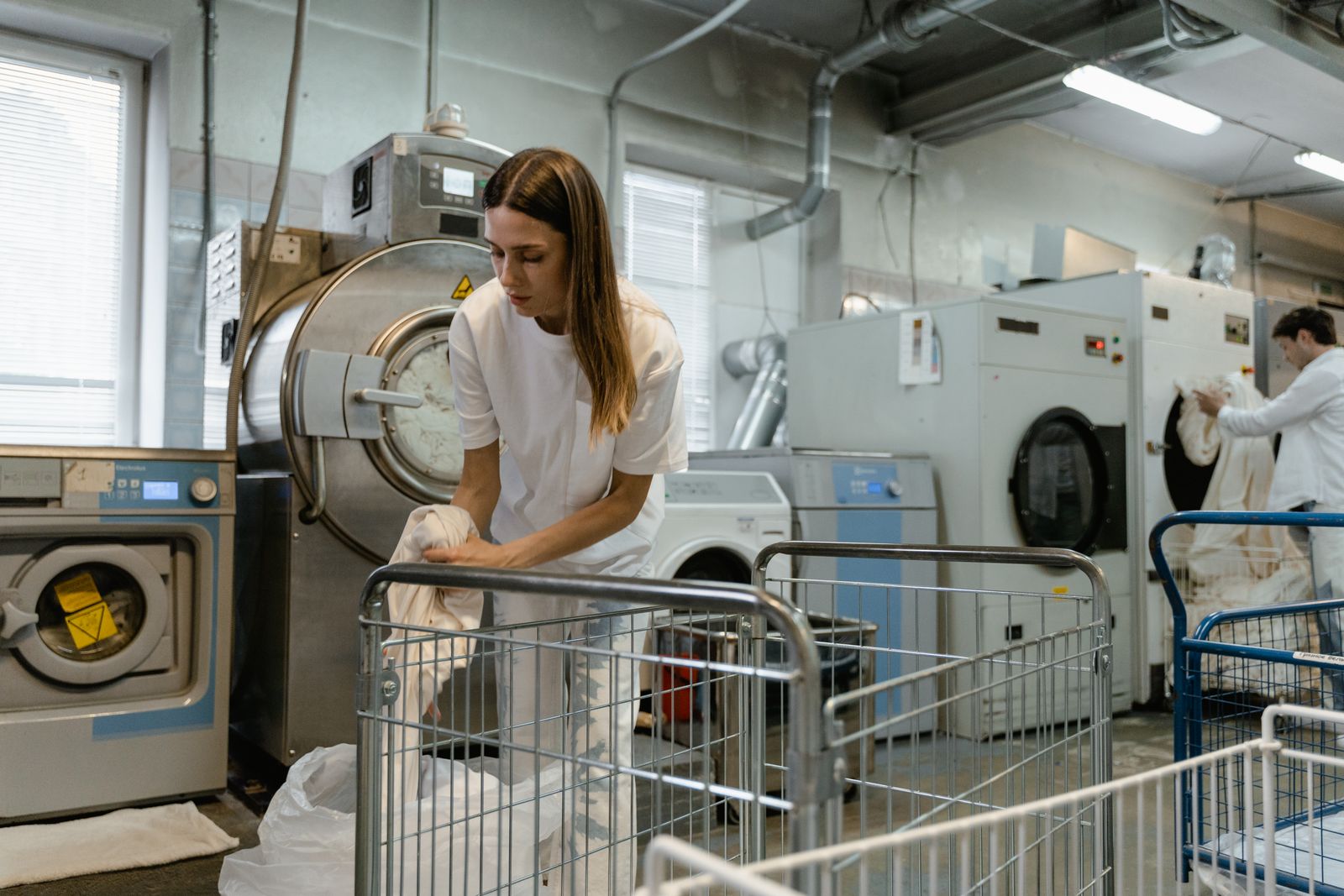
Photos in this guide are representative stock images.
← All guides from 3.09 Cleaners← Back to 3.09 Cleaners